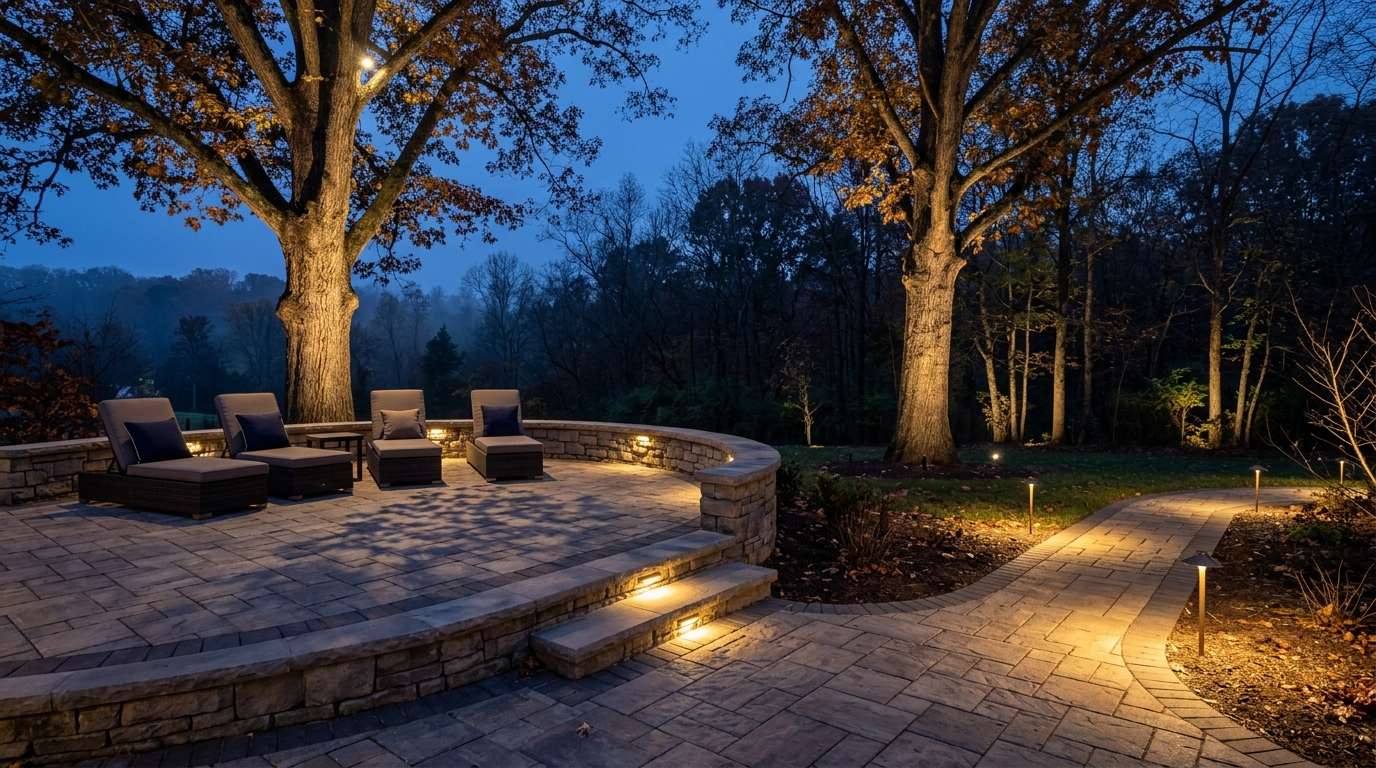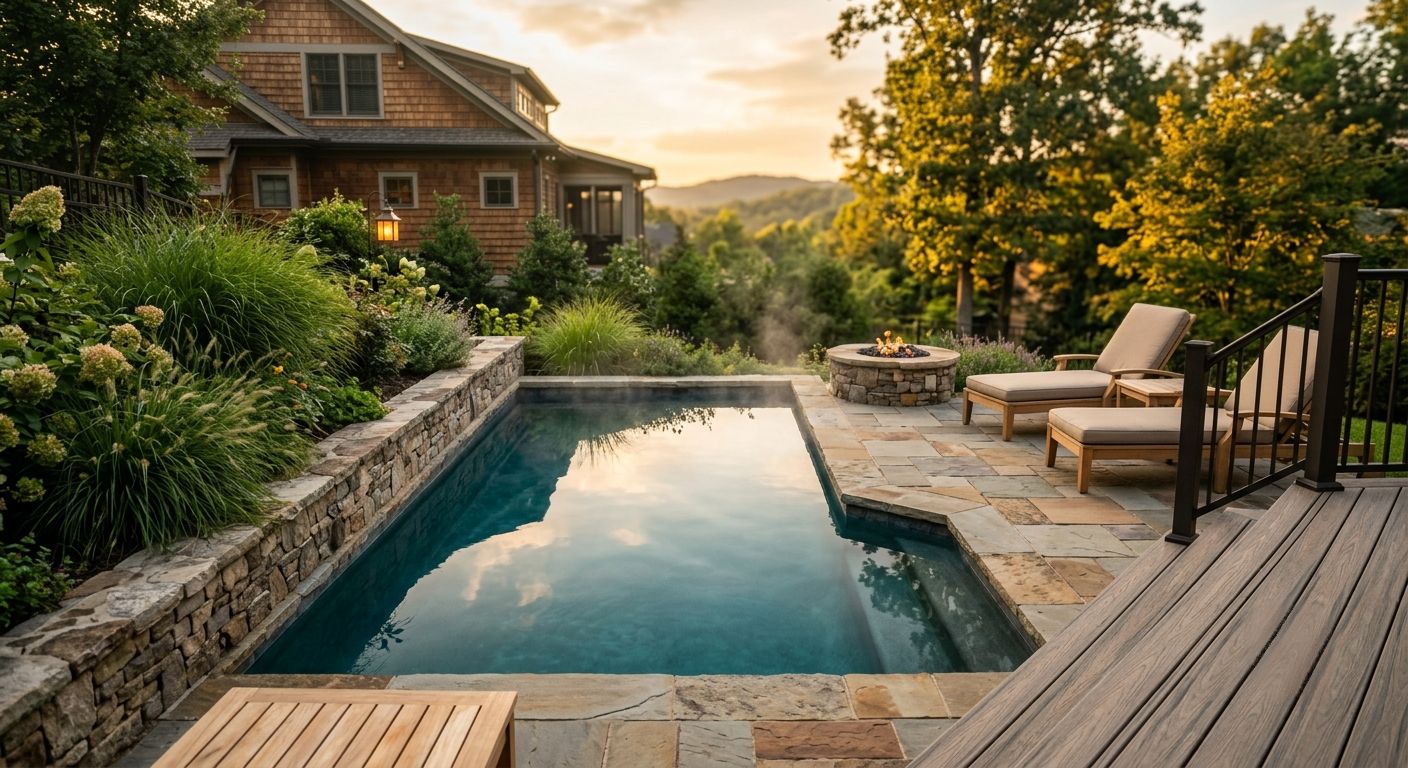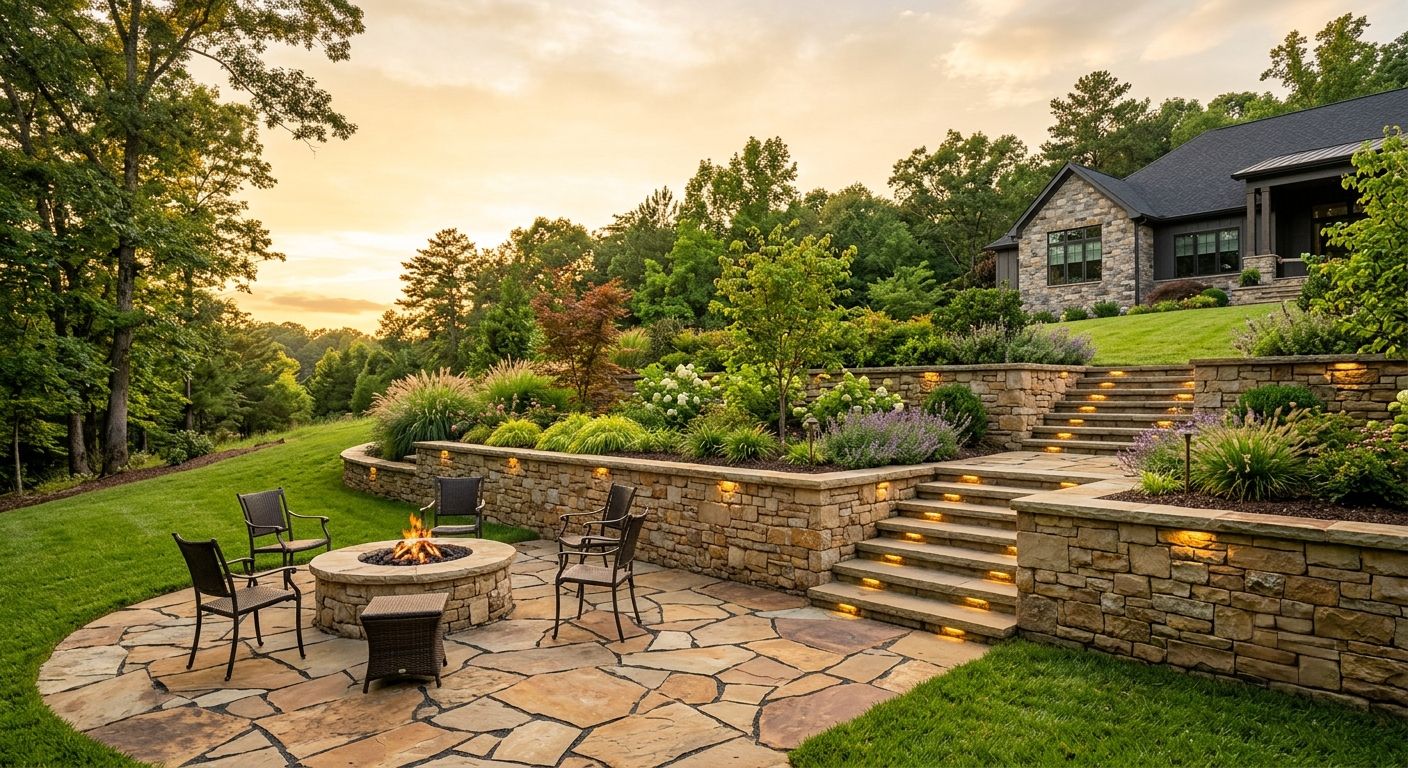
Outdoor Fireplace vs. Fire Pit in Knoxville: Which One Actually Belongs in Your Backyard?
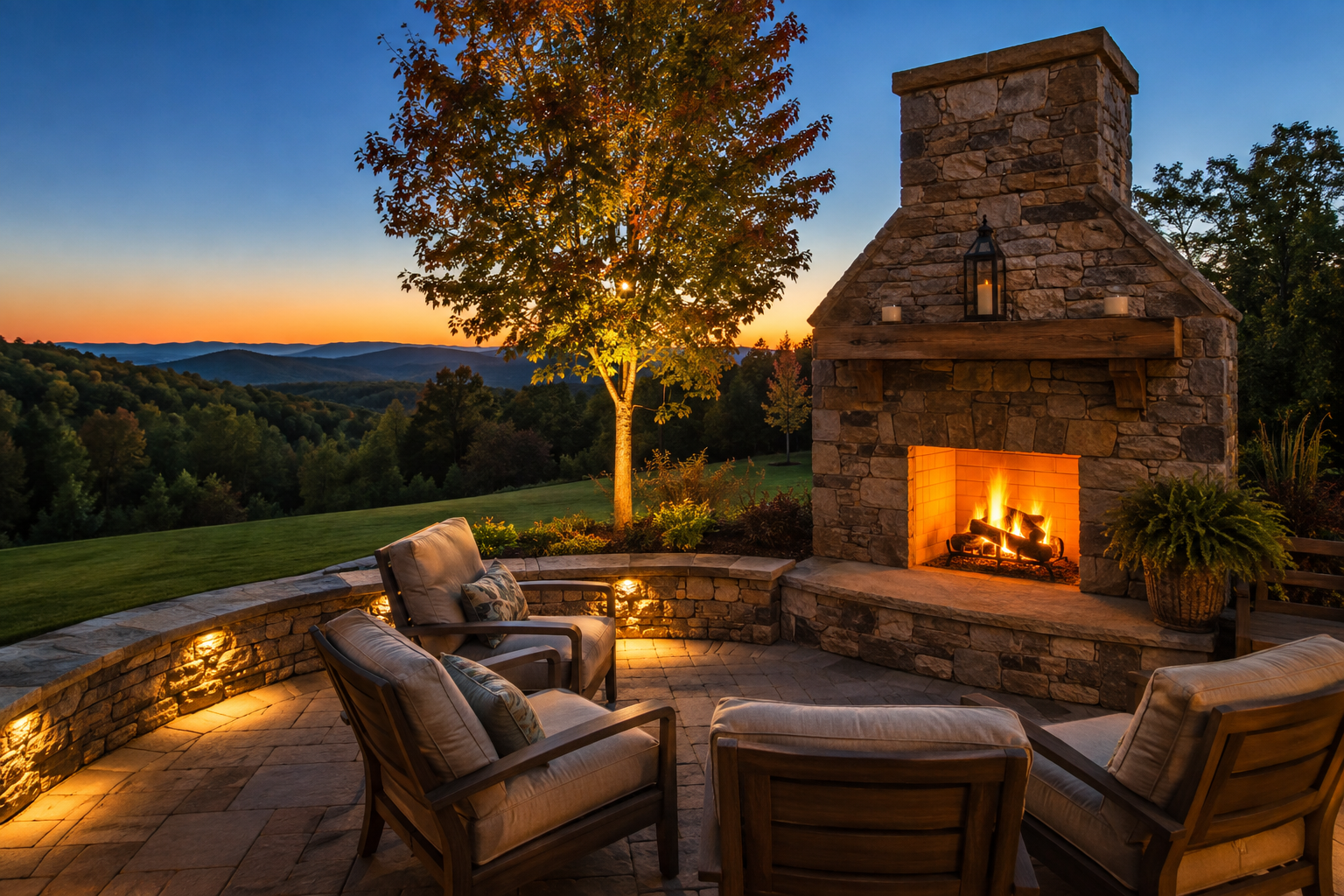
Outdoor Fireplace vs. Fire Pit in Knoxville: Which One Actually Belongs in Your Backyard?
Every year around the end of August, our phone starts doing the same thing. The nights drop into the low 60s, people sit outside for the first time in three months without sweating through a shirt, and they realize their patio has nowhere to gather. So they call and ask for a fire feature.
Then comes the part where most homeowners get stuck. Fire pit or fireplace? They sound like the same purchase with a different price tag. They are not. They are two different structures that solve two different problems, and picking the wrong one is the kind of mistake you live with for twenty years because both are built to last that long.
Here is how we walk Knoxville, Farragut, and Maryville homeowners through the decision, including what each one actually costs in East Tennessee in 2026 and the local code rules that quietly rule out one of the options on a lot of properties.
Start With How You Actually Use the Backyard
Before anyone talks about stone selection, we ask a boring question: how many people are usually out there?
Fire pits are conversational. Everyone faces in. Chairs go all the way around, nobody is at the head of the table, and the vibe is loose. Ten people can circle a 48-inch pit and everyone is in the same conversation. That is why fire pits win for families with kids, for people who host casual weeknight gatherings, and for anyone whose patio doubles as a s'mores station.
Fireplaces are directional. Everyone faces the same way, toward the firebox. That makes them feel like an outdoor living room instead of a campfire. You get seating on two or three sides, a mantle, a hearth people set drinks on, and a structure that blocks wind and gives you privacy from the neighbor's second-story window.
There is also a temperature difference nobody mentions until they have lived with both. A fire pit radiates heat in every direction, which sounds efficient until you are on the upwind side in January getting nothing. A fireplace pushes heat forward out of the firebox. On a 38-degree night in Knoxville, a fireplace keeps a seating area genuinely comfortable. A fire pit keeps the three chairs in the right spot comfortable.
What Each One Costs in Knoxville Right Now
Pricing on fire features swings hard because the range covers everything from a kit you assemble on a Saturday to a structural masonry build with a footing.
For fire pits, a basic prefabricated or block kit installed by a contractor typically lands in the low thousands. A custom fire pit built into a paver patio using real stone, with a gas line, a burner ring, and a proper drainage base, generally runs a few thousand more depending on diameter, veneer material, and whether we are integrating seat walls around it.
Outdoor fireplaces are a bigger structure and a bigger number. Locally, outdoor fireplace costs in Knoxville range from roughly $3,000 to $10,000 for solid custom installations, and $15,000 to $50,000 for luxury builds with premium features. Basic prefabricated units start lower, while mid-range custom builds typically fall between $6,000 and $15,000. The spread comes down to height, veneer, firebox type, and how much site prep the lot needs.
Timelines follow the same pattern. A basic installation can be done in one to two weeks, while a custom luxury fireplace build can take eight to twelve weeks.
A few things move the number more than homeowners expect:
Gas versus wood. Running a gas line from the house to the feature is real work involving a trench, a permit, and a licensed plumber. Gas costs more up front and saves you every time you want fire in nine seconds instead of twenty minutes. Wood is cheaper to build and better for people who genuinely enjoy the ritual.
Veneer choice. Tennessee fieldstone, cut limestone, thin brick, and stucco are not close to each other on price. Stone veneer on a fireplace chase is a lot of square footage, and material selection can swing the total by thousands.
Whether it stands alone. A fireplace attached to an existing patio is one project. A fireplace anchoring a new patio with a seat wall, lighting, and a pergola is a different budget entirely, and honestly a better result.
The Knoxville Ground Problem Nobody Warns You About
Here is where East Tennessee gets specific.
An outdoor fireplace is a masonry structure that can weigh several tons. It needs a reinforced concrete footing below the frost line, sized for the load and for what is underneath it. Our clay soil expands when it takes on water and shrinks when it dries out, and it does that cycle repeatedly through a Knoxville winter. Set a multi-ton chimney on an undersized footing in that clay and you get exactly what you would expect. The structure tilts, the mortar joints open, the veneer cracks along the corners, and the repair costs more than the original build.
We have been called out to look at fireplaces built by other crews that failed inside five years for this exact reason. The fireplace was fine. The dirt under it was not.
Slope makes it worse. Half the lots we work on in West Knoxville and around Farragut fall away from the house, and a lot of the pretty backyard spots are on fill dirt that was pushed there when the subdivision was graded. Fill is not the same as undisturbed soil. It has not compacted and it will keep settling for years. Building a heavy fire feature on it without addressing that is asking for a callback.
This is the practical argument for the fire pit on a lot of properties. A fire pit spreads a fraction of the weight over a wider area and is far more forgiving of imperfect ground. When we look at a sloped, filled backyard and the budget does not cover the grading and structural work a fireplace demands, the honest recommendation is a great fire pit on a properly built patio rather than a compromised fireplace.
Knox County Fire Code Rules Worth Knowing First
Local rules affect where the feature can go, and they surprise people after the design is already drawn.
Under the fire code the county follows, recreational fires cannot be conducted within 25 feet of a structure or combustible material, and anything that could let fire spread within that 25-foot radius has to be cleared before you light it. That number rules out a lot of the spots homeowners picture, especially on tighter lots in Bearden or Fountain City where 25 feet from the house also means 25 feet from a fence or a tree line.
The code also draws a line based on size. A recreational fire is defined as an outdoor fire with a fuel area of three feet or less in diameter and two feet or less in height, used for pleasure, cooking, warmth, or similar purposes, where the fuel is not contained in an incinerator, outdoor fireplace, portable outdoor fireplace, grill, or barbecue pit. Fuel contained in a permanent outdoor fireplace is treated differently than an open recreational fire, which is one more reason the distinction between the two features matters beyond aesthetics.
Then there is burn season. Tennessee requires burn permits statewide for open-air outdoor burning from October 15 through May 15, and the state forester can start that window early when conditions are dry. On top of that, Knox County Air Quality Management can issue a burn ban during high winds and low humidity, and those bans have included grills and fire pits.
If burning restrictions during the prettiest fire weather of the year sounds annoying, that is a genuine argument for gas. A properly permitted gas fire feature is not open burning in the same sense, and it sidesteps the seasonal headache. It is one of the main reasons our gas installs have outpaced wood the last few years.
Bottom line: verify current requirements with Knox County Codes Administration for your specific address before construction. If we build it, we handle that.
Where It Goes Matters More Than What It Is
Placement decides whether the thing gets used or becomes expensive yard sculpture.
Watch the prevailing wind. In East Tennessee our weather generally rolls in from the west and southwest. If you put a wood-burning fire pit directly upwind of your covered porch, you will smoke out the porch every single time. A fireplace chimney solves this by carrying smoke up and away, which is a real functional advantage on tight lots where you cannot get distance from the house.
Do not block the view. A seven-foot fireplace chase placed in the middle of a sight line to the mountains is a permanent decision. We mock up height on site with stakes and string before pouring anything, because a rendering does not tell you what a structure feels like from the kitchen window.
Think about the walk from the house. If your guests carry food and drinks 40 feet across dark grass to reach the fire, they will stop doing it in November. Fire features want to connect to the patio, with lighting along the path.
Plan for water. Any hardscape you add changes where water goes. Adding a patio and fireplace to a sloped lot without adjusting drainage sends more runoff somewhere it was not going before, sometimes toward your foundation. Grading and drainage should be part of the fire feature conversation, not a repair project the following spring.
So Which One Should You Build?
Build a fire pit if your backyard is fairly level, the budget is under about ten thousand, you host casual groups, the kids want s'mores, and you want the feature to be part of a broader patio rather than the whole show.
Build an outdoor fireplace if you want a structural focal point, you need wind and privacy screening, you want to genuinely use the space through a Knoxville winter, your budget supports the footing and masonry the job requires, and you plan to keep the house long enough to enjoy it.
There is a third answer we recommend more often than either extreme. Build the patio right, put in a well-designed fire pit now, and run the gas line and pour the footing for a fireplace during the same excavation. Trenching once is far cheaper than trenching twice, and you leave the door open without spending the full amount today.
Get It Designed by People Who Handle the Whole Site
The reason fire features fail in East Tennessee is almost never the fire feature. It is the footing, the fill dirt, the drainage, or the placement. Dodson Designs handles design, grading, drainage, hardscape, and masonry as one scope of work across Knoxville, Farragut, Maryville, and the surrounding area, which means the crew setting your fireplace is the same operation that evaluated the soil holding it up.
If you want to sit outside this fall instead of next fall, now is the time to start. Reach out for a consultation and we will walk your property, look at the slope and the soil, and tell you honestly which fire feature belongs in your backyard.