Retaining Walls in Knoxville: The Difference Between One That Lasts 50 Years and One That Fails in 5
Retaining Walls in Knoxville: The Difference Between One That Lasts 50 Years and One That Fails in 5
Drive through any neighborhood in Knoxville and you'll see them. The wall that bows out in the middle. The one with a long crack running diagonally across the face. The timber wall that's leaning toward the driveway like it's about to give up. Most of these started out looking fine. They were built, backfilled, and forgotten about, and then a few wet East Tennessee winters did the rest.
A good retaining wall is one of the most useful things you can add to a sloped property. It turns dead space into usable yard, it stops your hillside from sliding toward your house, and it can completely change how a backyard feels. A bad one is an expensive problem that gets worse every time it rains. The frustrating part is that the two often look identical on the day they're finished. What separates them is mostly stuff you can't see once the job is done.
So before you start collecting quotes, here's what actually matters.
Why So Many Knoxville Yards Need a Wall in the First Place
East Tennessee is not flat. Anyone who has tried to mow a hillside or set up a patio table on a slope already knows this. Our terrain is one of the things that makes the area beautiful, but it also means a lot of properties have a chunk of yard that's basically unusable. Too steep to walk on, too steep to plant, too steep to do anything with except watch the mulch wash away.
Then there's the soil. A lot of the Knoxville area sits on clay-heavy ground, and clay holds water. When it gets saturated during one of our heavy spring rains, it swells and pushes. That pressure has to go somewhere, and on a slope it tends to push downhill, taking soil, plants, and sometimes part of your foundation's support with it.
A retaining wall solves both problems at once. It holds the grade so the hill stays put, and it lets you carve flat, usable space out of ground that was doing nothing for you. Reclaim a slope with a wall and you can put in a patio, a fire pit, a level lawn for the kids, or a parking pad. The wall is structural, but the payoff is square footage you didn't have before.
That's the reason retaining walls show up in so many of our projects across Knoxville, Farragut, Maryville, and the surrounding areas. It's rarely the only thing a yard needs, but it's often the thing that makes everything else possible.
What a Retaining Wall Actually Costs in Knoxville
This is the question everyone wants answered first, and it's the one with the most annoying answer: it depends. But let's put real numbers to it instead of leaving you guessing.
In the Knoxville area, retaining walls generally run somewhere between $14 and $44 per square foot of wall face, depending mostly on the material. A small, simple project might land between $3,500 and $9,400, which lines up with what most homeowners pay nationally. Larger or more complicated builds go up from there, sometimes well into five figures once you factor in height, length, and site conditions.
Here's roughly how the materials stack up per square foot of face:
- Gabion (stone in wire baskets): $14 to $27
- Timber or railroad tie: $15 to $25
- Cinder or concrete block: $16 to $27
- Interlocking segmental block: $19 to $35
- Poured concrete: $27 to $39
- Natural stone or boulder: $27 to $44
Two walls that look about the same size can still come back with very different quotes, and that's usually a good thing to dig into rather than ignore. Height matters a lot, because a taller wall holds back exponentially more soil and needs more reinforcement. Site access matters too. If a crew has to haul block and stone through a narrow side yard by hand instead of driving equipment right up to the work, your labor cost goes up. And the condition of your slope, your soil, and your drainage can all add line items that a cheaper quote simply left out.
Which brings up the most important thing about pricing. When one bid comes in dramatically lower than the others, it's almost never because that contractor found a magic discount. It's because something got skipped. And the thing that gets skipped is usually the thing that keeps the wall standing.
The Materials, and When Each One Makes Sense
There's no single best material for a retaining wall. There's a best material for your wall, which depends on height, look, budget, and how the wall fits into the rest of your yard.
Segmental block is the workhorse of residential retaining walls, and for good reason. Brands like Belgard, Versa-Lok, and Allan Block make engineered units that lock together, handle curves, and come in finishes that look far better than the gray cinder block of twenty years ago. It's reliable, it's flexible, and for most Knoxville backyards it hits the sweet spot between cost and quality.
Natural stone and boulders are the premium look. A boulder wall or a hand-laid stone wall feels like it grew out of the landscape, which is exactly why people love them. They cost more and they take real skill to build well, but for the right property they're worth it.
Poured concrete is the heavy hitter. It's strong, it handles tall walls and serious loads, and it can be finished or veneered to look like almost anything. It's often the right call for higher walls or walls that are doing structural work near the house.
Timber is the budget option, and it's the one we steer people away from most often. Wood is cheaper up front, but in our climate it rots. The leaning, failing walls you see around town are very often timber. If you're planning to be in your home for more than a few years, the money you save on timber tends to come back as a repair bill.
The Part Nobody Sees Is the Part That Matters
Here's the thing about retaining walls that surprises most homeowners. The face of the wall, the part you actually look at, is not what holds it up. What holds it up is everything happening behind and beneath it, and that's where good walls and bad walls part ways.
Soil behind a wall holds water. When that water has nowhere to go, it builds up what engineers call hydrostatic pressure, which is a technical way of saying the wet ground behind your wall is constantly trying to shove it forward. In East Tennessee, with our clay soil and our rain, that pressure is no small thing. It's the number one reason walls bulge, crack, and eventually fail.
A wall built right gives that water an escape route. That means clean crushed stone packed behind the wall instead of the original dirt, a perforated drainpipe at the base to carry water away, and filter fabric to keep soil from clogging the system over time. None of it shows once the job is done. All of it is the difference between a wall that lasts fifty years and one that starts moving after a few hard winters.
The base matters just as much. A proper wall sits on a compacted gravel foundation set below frost depth, leveled carefully so the whole structure has something solid and stable to rest on. Skip the base prep, build straight on dirt, and the wall will settle unevenly and tear itself apart from the bottom up.
This is the stuff that gets left out of a suspiciously cheap quote. You won't notice it's missing on day one. You'll notice it in about year three.
When You Need an Engineer and a Permit
Not every wall needs a permit, but plenty do, and it's worth knowing where the line is before you start.
In and around Knoxville, retaining walls under about three feet tall usually don't require a permit, as long as they aren't holding up a structure or sitting next to public property. Once a wall passes the three to four foot mark, you're generally looking at engineering and a building permit through the City of Knoxville or Knox County, depending on where you live. That engineering isn't red tape for its own sake. A wall that height is holding back a serious amount of weight, and it needs to be designed to do it safely.
One detail that trips people up: tiered walls. If you've got a tall slope broken into two or three shorter walls stacked up the hill, the individual walls might each be under three feet, but the combined load can still trigger permit and engineering requirements. The walls interact with each other, and the soil load adds up. A contractor who knows the local codes will flag this early instead of building first and dealing with it later.
A full-service team handles all of this for you. Permitting, engineering coordination, inspections, none of it should land on your plate.
Walls That Do More Than Hold Back Dirt
The best retaining walls don't look like they're solving a problem. They look like they were always meant to be there.
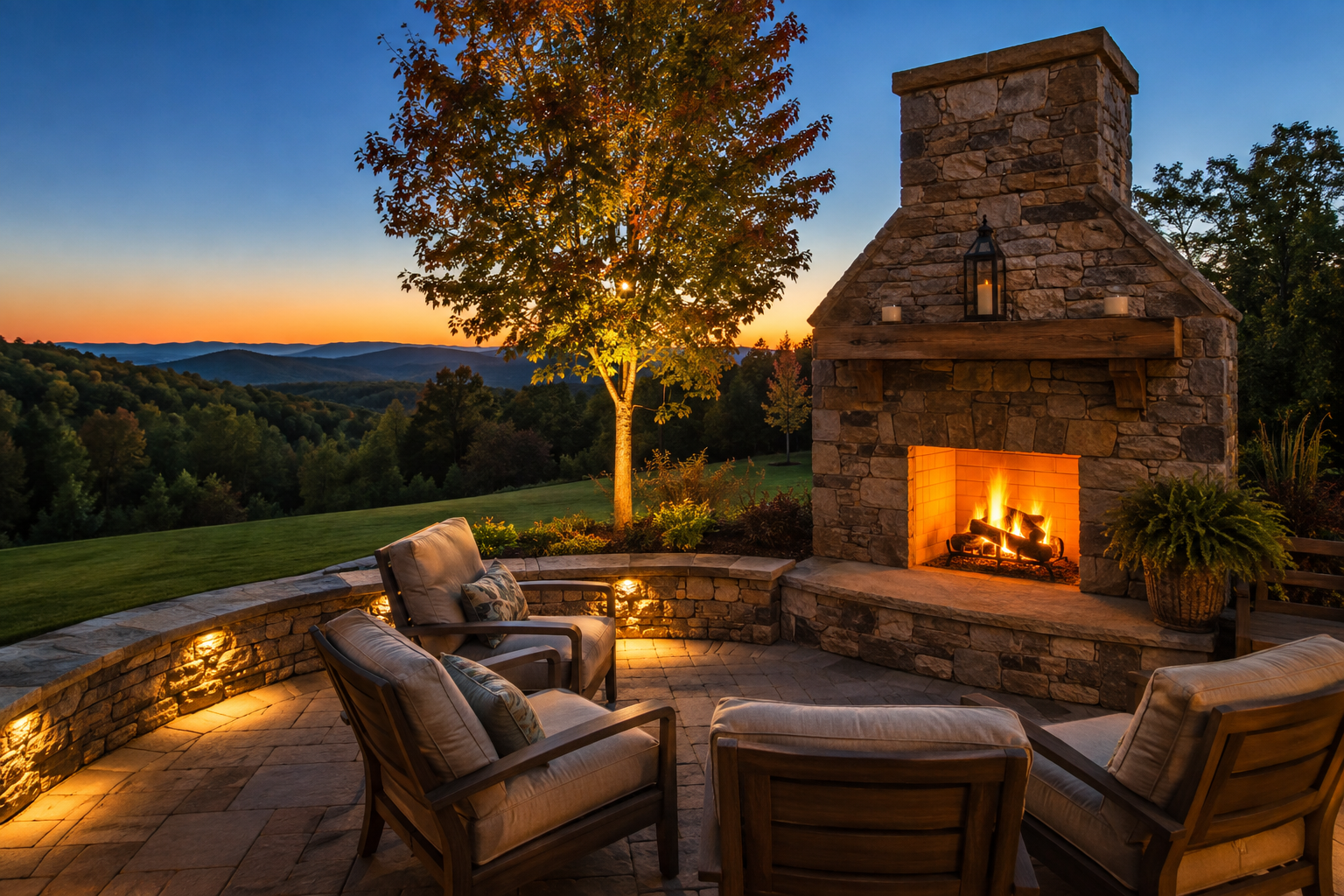
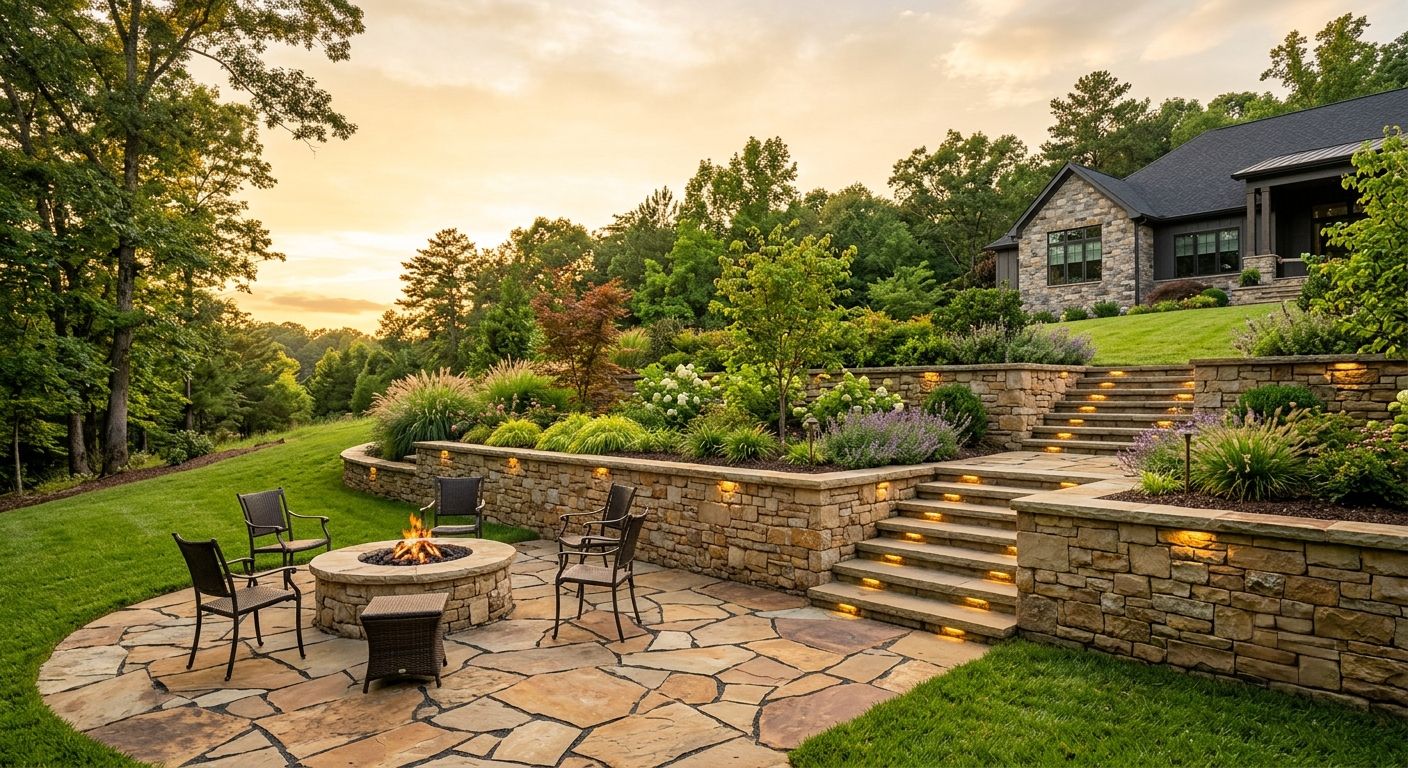
Once you're building a structure to hold a grade, you've got an opportunity to make it do more. A retaining wall can double as seat-height seating around a patio or fire pit. It can step up a slope in tiers, with planting beds on each level, so a hillside becomes a layered garden instead of a wall of dirt. Cap it in the right stone and it ties straight into your patio and walkways. Tuck low-voltage lighting into the caps or the base and it glows after dark and guides you up the steps without a single visible fixture.
This is where a wall stops being a fix and starts being design. And it's a big part of why we think about retaining walls as one piece of the whole yard rather than a standalone job. The wall affects the grading. The grading affects the drainage. The drainage affects the patio and the planting. When one team plans all of it together, the wall doesn't just hold the hill. It makes the entire space work.
That's the real difference between hiring someone to throw up a wall and building something that lasts. One holds back dirt for a few years. The other reshapes how you use your property for the next fifty.
If you've got a slope you've been ignoring, a wall that's already starting to lean, or a backyard that feels half the size it should be, that's exactly the kind of thing we build. Dodson Designs handles the engineering, the drainage, the grading, and the design as one project, across Knoxville and East Tennessee, so the finished wall does its job and looks like it belongs.